Jews in Ukraine
At the end of the 18th century, as a result of the three partitions of the Polish-Lithuanian Commonwealth, part of its territory—where Jews had already lived for centuries—was annexed by the Russian Empire. According to the 1897 census, the empire’s Jewish population had reached up to 5,200,000 people. In 1791, under Catherine the Great, the Pale of Settlement was established, defining the territory beyond which Jewish residence was prohibited. It encompassed former Polish lands, the southern regions of Ukraine, and Crimea. It was largely the Pale of Settlement that predetermined the emergence of the shtetls—market towns where Jews constituted the majority of the population.
Following the establishment of Soviet rule, Jewish communal life was virtually wiped out, and the shtetls began to decline.
In August 1939, the notorious Molotov–Ribbentrop Pact was signed, transferring Western Ukraine, Western Belorussia (Belarus), Northern Bukovina, and Bessarabia to the Soviet Union. On the eve of the German invasion, approximately 2.7 million Jews lived on the territory of Ukraine (within its contemporary borders). By the size of its Jewish community, Ukraine ranked first in Europe and second in the world as of mid-1941.
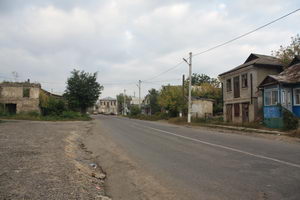
History of the shtetls, photographs, and regional maps featuring Jewish heritage sites
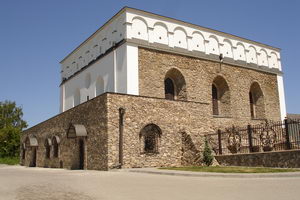
Galleries of archival and contemporary photographs of synagogue buildings
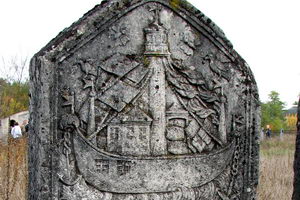
Stone carving, wooden tombstones, symbolism, and epigraphy
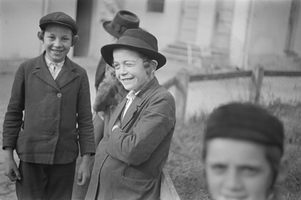
Photographs and postcards depicting Jewish life in the 19th and 20th centuries